Educate. Motivate. Activate.
WASHINGTON, DC – The Tom Lantos Human Rights Commission convened back-to-back hearings on June 3 and June 30 documenting Turkey’s political imprisonment of dissidents, its denial of the Armenian Genocide, and its continued occupation of areas in the north of Cyprus. Witnesses called on Congress and the administration to expand Global Magnitsky sanctions against Turkish officials, designate Turkey a Country of Particular Concern for religious freedom violations, place Turkey on the Financial Action Task Force blacklist, and reject Turkey’s reintegration into the F-35 program along with a ban on its pending purchase of American-made jet engines.
“These hearings draw into the bright sunlight the sins that Erdogan spends millions trying to hide in the shadow – the mass jailing of Turkey’s journalists and political opposition, the colonization of occupied Cyprus, and a century of obstructing justice for the Armenian Genocide,” said ANCA Executive Director Aram Hamparian. “Congress needs to act now — sanctioning responsible Turkish officials, blacklisting the networks bankrolling terror out of occupied Cyprus, and refusing to arm Erdogan with F-35s and jet engines he will surely use against Armenia, Greece, Cyprus and other U.S. allies.”
Political Prisoners and Religious Freedom: The Case for Magnitsky Sanctions and CPC Status
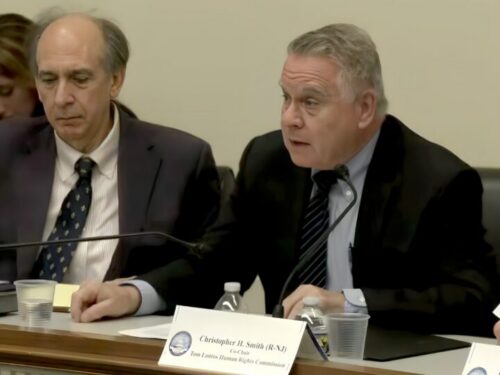
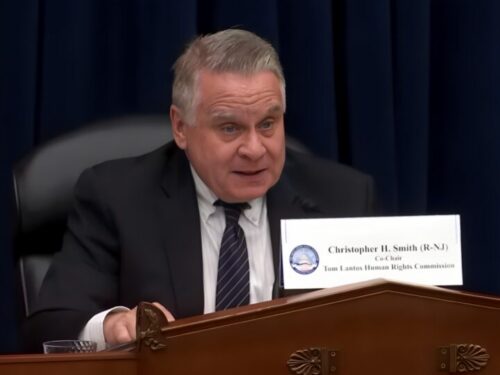
At the June 3 hearing, “Can Turkey Find Its Way Back to Freedom?,” Tom Lantos Human Rights Commission Co-Chair Rep. Chris Smith (R-NJ) reported that Turkey now holds more than ten thousand political prisoners, including journalists, lawyers, elected officials, and civil society leaders, jailed under increasingly abusive counterterrorism laws — repression that has deepened over Recep Tayyip Erdogan’s twenty-three years in power, first as prime minister beginning in 2003 and then as president since 2014, atop his Justice and Development Party (AKP).
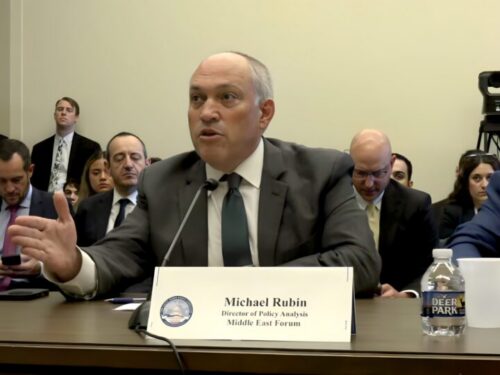
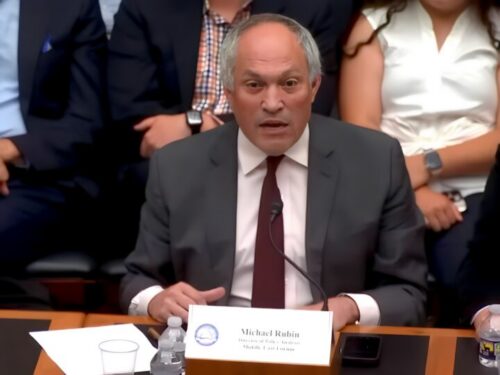
That same repression extends to religious minorities, Michael Rubin testified. The Middle East Forum’s Director of Policy Analysis told the commission that Erdogan and his officials use religious minorities, including Turkey’s dwindling Jewish and Christian communities, as targets of state-tolerated incitement, and pointed to the treatment of Armenian and Greek religious sites in Istanbul as part of the same pattern. “Just as Erdogan now seeks a say in Muslim holy sites in Jerusalem,” Rubin testified, “so too should that model now [be] applied to Greek and Armenian sites in Istanbul.”
Rubin also cited the Armenian Genocide as proof that Turkey’s threats of retaliation rarely materialize. “We saw this with both the Biden administration’s recognition of the Armenian Genocide and that of all fifty states and the District of Columbia,” Rubin testified. “Those recognitions happened and Turkey didn’t do a damn thing.”
Given this record, Smith called for both individual accountability and a formal religious freedom designation. “I believe the Magnitsky sanctions need to be used far more robustly everywhere, not just in Turkey, and religious freedom CPC status ought to be meted out for Turkey,” Smith said. The Global Magnitsky Act allows the United States to freeze the assets of and bar entry to specific foreign officials responsible for human rights abuses or corruption, targeting individuals rather than the country as a whole. Country of Particular Concern, or CPC, status is a State Department designation for governments that engage in or tolerate systematic, ongoing, and egregious violations of religious freedom, and can trigger sanctions under U.S. law.
Cyprus Occupation and Genocide Denial
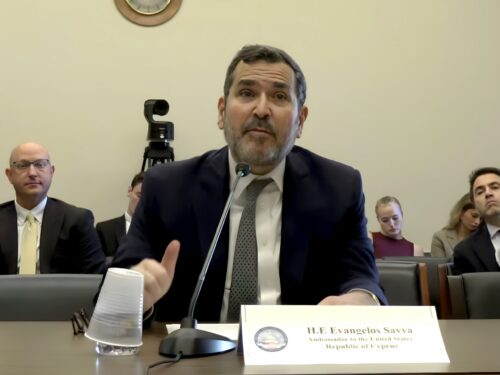
The June 30 hearing, “Human Rights in Occupied Cyprus,” turned to Turkey’s fifty-two-year occupation of the island ahead of the NATO summit in Ankara. Republic of Cyprus Ambassador Evangelos Savva testified that Turkey continues to block access to mass graves holding the remains of Cypriots killed during the 1974 invasion, including at least five American citizens, and refuses to cooperate with the Committee on Missing Persons investigating their fate. “This is a particular stain on Turkey, not allowing people to finally have closure on the fate of their loved ones,” Savva testified.
Turkey’s refusal to reckon with the past is not limited to Cyprus, Chairman Smith noted, recalling that a Turkish ambassador once threatened U.S. access to Incirlik Air Base in retaliation for a Congressional hearing on the Armenian Genocide. “You like your base in Incirlik? Well, it may be gone if you recognize the genocide committed against the Armenians,” Smith recounted the ambassador saying. “I said, what a weak partner you are in NATO when you threaten our base because we’re calling you out.” Rubin testified that Erdogan proved himself “an empty suit” on that threat, since the United States and all fifty states recognized the Armenian Genocide without Turkey following through on the retaliation it had promised.
A Military Buildup Aimed at NATO Allies: The Case Against F-35s and Engine Sales
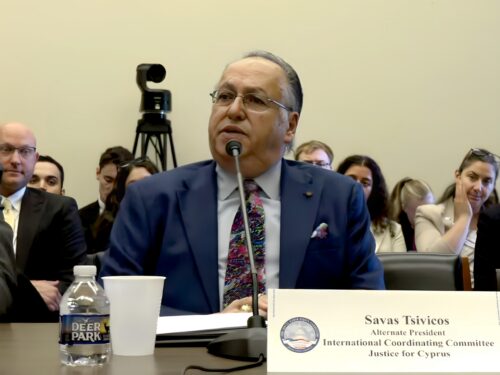
The same hearing turned to Turkey’s military ambitions. Witnesses testified that Turkey’s pursuit of F-35 reintegration and a proposed $700 million purchase of GE F-110 jet engines is not aimed at Russia, despite Ankara’s framing of the deals as NATO-aligned. Savas Tsivicos of the International Coordinating Committee — Justice for Cyprus (PSEKA) testified that Turkey’s own posture toward Israel, Greece, and Cyprus, not Russia, reveals the true purpose of the weapons. “Those F-35s and jet engines are not going to go against Russia,” Tsivicos testified. “After all, Erdogan is in bed with Putin. Those weapons will be used against the three strategic allies of the United States: Israel, Greece, and Cyprus.”
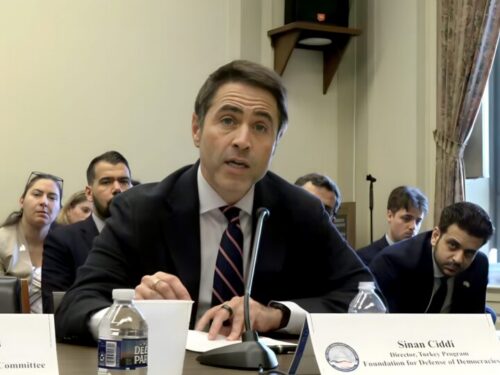
Sinan Ciddi of the Foundation for Defense of Democracies added that F-35 reintegration would let Turkey project its “Blue Homeland” maritime claims, which he described as a violation of international maritime law, backed by advanced military platforms.
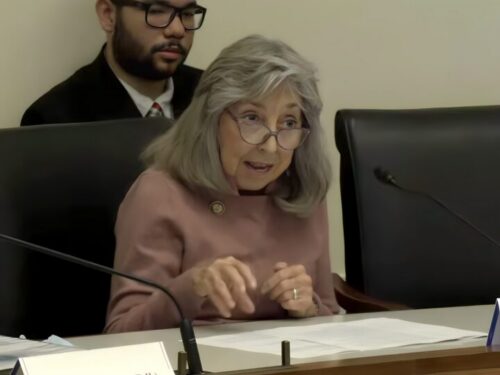
Congress is already moving to block both transfers: Rep. Dina Titus (D-NV) told the commission she is introducing a joint resolution of disapproval to block the F-110 engine sale and leading a letter to House leadership opposing any attempt to readmit Turkey into the F-35 program. “By rewarding Erdogan with arms sales that he wants so badly, we are perpetuating the horrific policies of a government that has flouted international law with respect to Cyprus,” Titus said.
The ANCA is working alongside Hellenic American organizations, including PSEKA, the Hellenic American Leadership Council, the American Hellenic Institute, and AHEPA, to oppose both Turkey’s F-35 reintegration and the engine sale. Armenian Americans can visit anca.org/noengines to urge their Representatives to support Rep. Titus’s resolution and oppose both transfers.
Terror Finance and Money Laundering: The Case for an FATF Blacklist
Turkey’s ambitions abroad are matched by financial abuses at home, Rubin testified, describing occupied northern Cyprus as a hub for money laundering and terror finance, with casinos and universities operating there that fund terrorism and facilitate human trafficking.
On that basis, Rubin called for formal financial accountability measures. “The United States should link Turkey’s inclusion on the Financial Action Task Force blacklist with its behavior in Northern Cyprus,” Rubin testified. The Financial Action Task Force is an intergovernmental body that identifies countries whose financial systems pose a risk of enabling money laundering and terror financing; blacklisting can trigger enhanced due diligence and restrictions from banks and governments worldwide.
Bringing the Record to Congress: Who Testified
Both hearings drew testimony from a range of witnesses and Members of Congress. The June 3 hearing, “Can Turkey Find Its Way Back to Freedom? Authoritarian Consolidation versus the Defense of Turkish Democracy,” was chaired by Tom Lantos Human Rights Commission Co-Chairs Rep. Chris Smith and Rep. James P. McGovern. Witnesses included Henri Barkey, Adjunct Senior Fellow for Middle East Studies at the Council on Foreign Relations; Michael Rubin, Director of Policy Analysis at the Middle East Forum; Serkan Golge, Senior Research Scientist and former political prisoner in Turkey; and Andrew O’Donohue, Carl J. Friedrich Fellow at Harvard University and Nonresident Scholar at the Carnegie Endowment for International Peace.
The June 30 hearing, “Human Rights in Turkish-Occupied Cyprus: Erdogan’s Record and Its Implications for the Ankara NATO Summit,” was chaired by Rep. Smith and Rep. McGovern, and included participation by Rep. Gus Bilirakis (R-FL), Rep. Brad Schneider (D-IL), and Rep. Dina Titus (D-NV). His Excellency Evangelos Savva, Ambassador of the Republic of Cyprus, testified in the briefing portion of the hearing. Additional witnesses included Michael Rubin; Savas Tsivicos, Alternate President of the International Coordinating Committee — Justice for Cyprus (PSEKA) and former Supreme President of the American Hellenic Educational Progressive Association; and Sinan Ciddi, Director of the Turkey Program at the Foundation for Defense of Democracies.
#####